
Family of Three in Business Class to New York for 150,000 EuroBonus Points
How Fly Premium, the SAS child discount and flexible routing put two adults and a five-year-old in SAS Business to New York for 150,000 points.
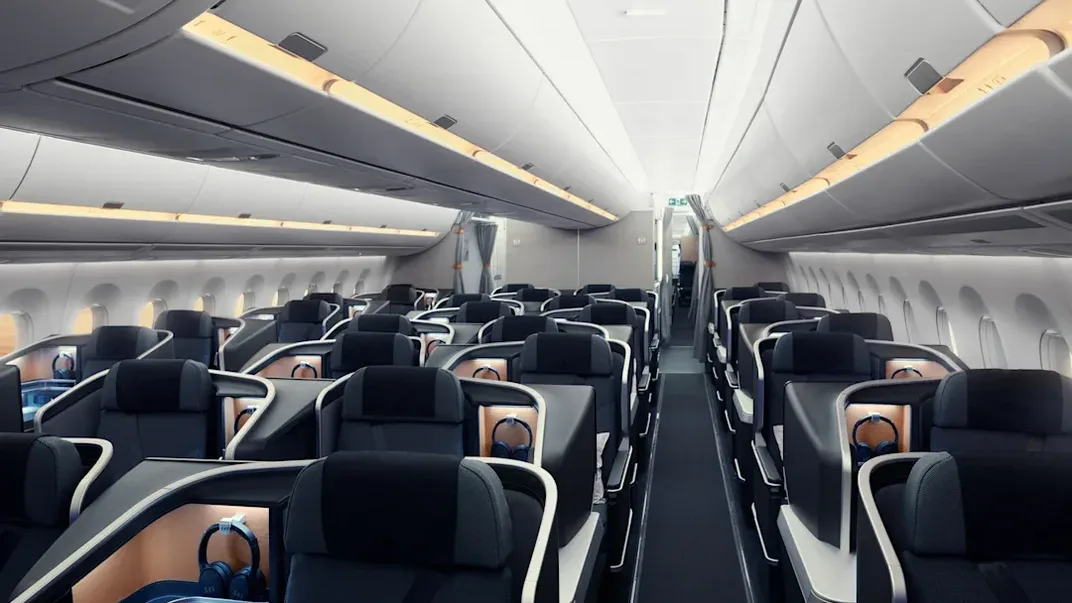
In July 2025, my wife, our five-year-old son and I flew SAS Business Class from Stockholm to Newark. We landed in New York, picked up a rental car and spent a bit over two weeks driving north — up through the Hudson Valley, into the Adirondacks, across the border to Montreal. We flew home from JFK at the end of the trip.
Three Business Class seats. Two New York airports. One round-trip booking. Total cost: 150,000 EuroBonus points.
That number surprises people. The standard Business Class price for two adults and one child round trip to North America, without any optimization, would have been 250,000 points before the devaluation — and 290,000 today. We paid 60 percent of the pre-devaluation list price, and we got a better setup than a tidy round trip to a single airport would have allowed.
This is how family bookings work on EuroBonus once you stop thinking of Business Class as a couples-or-solo product and start using every lever available. There are three: Fly Premium, the SAS child discount, and flexible routing within the same metro area. Together they turn long-haul Business into a realistic family travel category.
The booking, line by line
Booked for travel July 5–22, 2025.
Outbound: ARN → EWR (Newark), nonstop, July 5
Return: JFK → CPH → ARN, July 22
Standard Business price (before the December 2025 devaluation): 50,000 points one way to North America. Round trip per adult: 100,000. For two adults plus one child at 50 percent off: 100,000 + 100,000 + 50,000 = 250,000 points.
Fly Premium price (the 200k tier): Economy price in points = 30,000 one way to North America. Round trip per adult: 60,000. Child at 50 percent off the Fly Premium price: 30,000. Total: 60,000 + 60,000 + 30,000 = 150,000 points.
The cash component covered standard taxes and fees, paid by card at booking.
For perspective on the redemption value: the equivalent SAS Business round trip for a family of three bought in cash is a major travel expense even at the lower end of Business pricing. The points booking captured most of that value at roughly half of what two full-price points Business trips would have cost.
That's the math. Here's why each piece works.
Lever one: Fly Premium at the top tier
I went through this in detail in the Fly Premium guide, but the short version: SAS Mastercard Premium holders who have earned 200,000+ Bonus points over a rolling 12 months can book any SAS-operated flight in Business Class at the Economy price in points.
On long haul to North America, that means 30,000 points one way instead of 60,000 (after the devaluation) or 50,000 (before). Per person, per direction. Unlimited bookings throughout the year.
The benefit applies to everyone on the same booking, not just the cardholder. That's the part people most often miss. Book your partner, your kids, your parents — everyone gets the discount as long as they travel on your booking. There is no "primary cardholder only" rule.
Why this is decisive for families: the Amex 2-for-1 voucher, the other major Business Class discount tool, has a hard cap of two travelers per booking. It can't fit a family of three on one reservation. Fly Premium has no traveler limit. Two, three, four travelers — the same discount applies to all of them.
Lever two: the child discount (SAS-operated flights only)
EuroBonus gives 50 percent off award tickets for children aged 2–11 on SAS-operated flights. The discount applies to both the points price and most of the taxes and fees. Children under 2 fly on your lap for a nominal tax only.
The strategic detail most people miss: the child discount does not apply to partner bookings. The SAS terms are clear: no child discount (ages 2–11) on partner award flights. Book the kids on KLM, Air France, Delta, Korean Air or Virgin Atlantic and they pay the full adult price in points.
That makes routing on SAS-operated flights distinctly more valuable for families than any partner alternative. A family of three to North America on SAS metal: 150,000 points with Fly Premium and the child discount. The same family on a KLM partner booking over Amsterdam: at least 240,000 points, no Fly Premium discount, no child discount, plus a 450 SEK per-person partner administration fee on top.
Based on my actual booking, the child discount stacks with Fly Premium — my son's price was 30,000 points round trip, which is 50 percent of the Fly Premium price (60,000), not 50 percent of the Business list price. The terms don't document this explicitly, but the booking priced out at exactly 150,000 points, which only adds up if both discounts apply at the same time.
A note on age: the discount is based on age on the travel date, not at booking. If your child turns 12 between booking and flying, you're charged the difference. Think it through if you're close to the cutoff.
Lever three: flexible routing within the same metro area
We didn't fly in and out of the same airport. We flew into Newark, drove north for two-plus weeks all the way to Montreal, and flew home from JFK. That meant:
- No backtracking to a single airport
- No rental car fees for a drop-off in another state
- No domestic flight back to the original arrival city
SAS charges nothing extra for this kind of multi-airport routing within the same metro area. Newark and JFK are both New York airports, and from the points-pricing perspective the booking is treated as a standard round trip ARN to North America. The flexibility costs nothing. If you want to see what Business space actually looks like on this route before you commit, RoamSnap tracks live SAS award availability and release patterns for New York, and the full-network view is in the award browser.
True open-jaw bookings — where the departure or destination cities are in different zones — are also allowed, but with restrictions. SAS permits an open jaw on either the origin or the destination, not both at once. Stockholm out and Copenhagen home is fine (both in the Europe zone). Newark in and Atlanta home would work (both in the North America zone). Both at once doesn't fly: you can't go Stockholm to Newark and home from Atlanta to Copenhagen on the same award booking.
For families doing road trips or multi-city itineraries, this single rule unlocks meaningfully better planning. A two-week loop through the northeastern US works fine on one award ticket. A cross-country road trip San Francisco to New York would also work as a true open jaw, since both endpoints are in the North America zone.
The booking has to be made by phone through EuroBonus customer service — the online tool doesn't handle multi-airport routing reliably. SAS normally charges a service fee for phone bookings, but Diamond members can book by phone without one. For everyone else, it's worth asking the agent whether the routing could even have been completed online; if not, the fee is sometimes waived.
Planning a complex family routing? Get in touch — multi-airport and open-jaw award bookings are exactly the kind of thing that's hard to find online but straightforward once you know the rules.
What didn't work, and why
Two strategies I considered and rejected:
Using an Amex 2-for-1 voucher instead of Fly Premium. I hold the SAS Amex Elite card and had a voucher in stock. The math: the voucher on my wife and me would have come to 100,000 points combined for the round trip (the voucher halves the points price, applied to two travelers on the same booking). Then my son at 50,000 (his separately child-discounted Business price). Total: 150,000 points — the same as Fly Premium. But the voucher is a limited benefit (max two per year), and burning it on a route SAS already flies with Fly Premium coverage would have been a waste. I saved the voucher for a partner booking later in the year. Use the limited tool when it's the only one that works; use the unlimited tool everywhere else.
Booking partner flights (Air France, KLM) to North America. A partner booking would have added 450 SEK per traveler in administration fees on top of the points cost. More importantly: Fly Premium doesn't apply on partners, and neither does the child discount — we'd have paid the full Business points price for all three of us. The math deteriorates fast: at least around 240,000 points versus 150,000 on SAS-operated flights.
What this booking taught me
Three takeaways if you're a EuroBonus member planning a family trip in Business Class.
One: the price ceiling is much lower than people think. A family of three or four in Business to North America is realistic in the 150,000–200,000 point range with the right tools and routing. That's roughly the same points cost as a single solo round trip in Business at the full pre-devaluation list price. The math runs against intuition because people assume every additional traveler doubles or triples the cost. With Fly Premium and the SAS child discount, additional family members cost a fraction of the first.
Two: SAS-operated flights beat partners for families, almost always. The combination of the Fly Premium discount and the SAS-specific child discount makes SAS bookings dramatically cheaper than the equivalent partner alternative — even when the partner option looks more direct or convenient on paper. On long haul, that means flying SAS to North America (where SAS operates extensive routes) and saving the partner strategy for destinations SAS doesn't reach.
Three: routing flexibility is an underused EuroBonus benefit. Multi-airport bookings within the same metro area cost nothing extra. True open jaws between different cities in the same zone cost nothing extra. The flexibility is built into the program; it just isn't very visible. For trips with a road-trip or multi-city component, plan the trip you actually want to take, then book a routing that supports it.
The bottom line
Family Business on EuroBonus isn't some exclusive edge case. It's a category most active members can reach with the right card setup and a willingness to plan ahead. The combination of the Fly Premium top tier, the SAS-specific child discount and flexible routing turns something that looks like it costs 290,000 points today into a 150,000-point booking — and the trip you take with the points you saved is genuinely better, not just cheaper.
If you're sitting on a EuroBonus balance and thinking about a summer trip with the kids — the planning starts now. The May–August school-holiday window fills first; multi-airport routings require phone bookings that take longer to set up; and the child discount has age cutoffs that matter in borderline cases.
Get in touch and I'll go through your specific dates, ages and points balance. Pricing is confirmed up front and scales with how complex the routing is.
Frequently asked questions
Does the EuroBonus child discount apply on partner award flights?
No. The SAS terms are clear that the 50 percent child discount (ages 2–11) applies only on SAS-operated flights. On partner awards — KLM, Air France, Delta, Korean Air, Virgin Atlantic — children pay the full adult price in points, and a 450 SEK per-person partner administration fee applies on top.
Does Fly Premium apply to everyone on the booking?
Yes. The benefit covers everyone traveling on the cardholder's booking — partner, children, parents — not just the cardholder. There is no "primary cardholder only" rule, and unlike the Amex 2-for-1 voucher (capped at two travelers per booking), Fly Premium has no traveler limit.
Does the child discount stack with Fly Premium?
Based on my actual booking, yes. My son's price was 30,000 points round trip — 50 percent of the Fly Premium price (60,000), not 50 percent of the Business list price. The terms don't document the stacking explicitly, but the booking priced out at exactly 150,000 points, which only works if both discounts apply simultaneously.
Can you fly into Newark and home from JFK on one award booking?
Yes. Newark and JFK are both New York airports, and SAS treats the booking as a standard round trip from ARN to North America — the multi-airport routing costs nothing extra. You do need to book by phone through EuroBonus customer service, since the online tool doesn't handle this routing reliably.
Originally published in Swedish at Riviario. Adapted for RoamSnap by the author.
Related Articles
 Guide
GuideSAS Business at Economy Price: How Fly Premium Works in 2026
My in-laws flew SAS Business Copenhagen–Bangkok round trip for 120,000 points total — the Economy price for two. Here is exactly how Fly Premium works in 2026.
Jul 4, 2026 · Philip Wallin
 Guide
GuideChristmas in Thailand and Singapore on EuroBonus Business Class: Three Travelers, 281,250 Points
How we flew a family of three Stockholm–Bangkok–Singapore in Business Class over Christmas for 281,250 EuroBonus points, using two Amex Elite vouchers.
Jul 4, 2026 · Philip Wallin
 Guide
GuideDubai in KLM Business on the Amex Elite Voucher: A EuroBonus Redemption Case Study
How a SAS Amex Elite 2-for-1 voucher put two travelers in KLM Business to Dubai for 130,000 EuroBonus points — booked weeks out, in peak season.
Jul 4, 2026 · Philip Wallin